Completed Basements
Dry Finished Basement
A dry finished basement remains the objective behind waterproofing and drainage work.
View project detailsWe inspect where and when water is entering your basement, then recommend an appropriate waterproofing, crack-repair, drainage or sump-pump solution for the property.
The first visible location and the conditions that trigger it can help narrow down the likely water pathway.
A focused repair may be enough for one crack or window well. Recurring perimeter seepage can require a broader interior or exterior system.
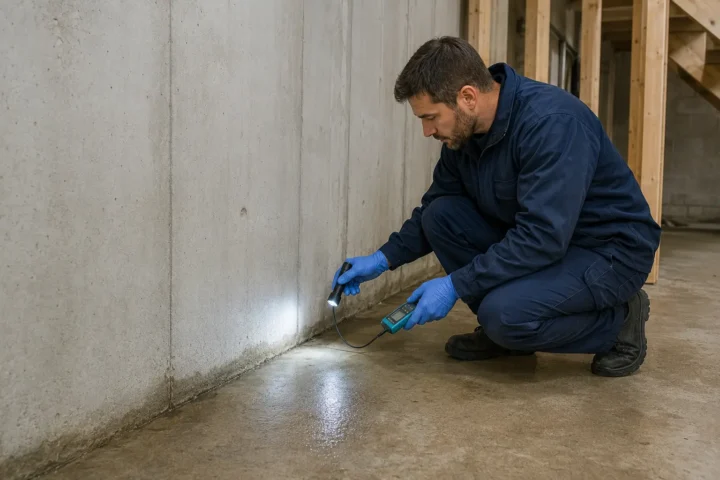
Leaks after rain, wet finished walls and unexplained water near the foundation.
Explore service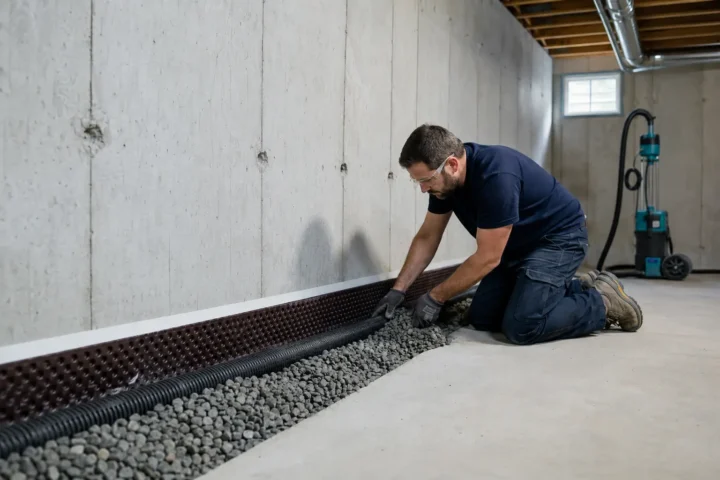
Perimeter drainage and wall drainage systems that collect and direct incoming water.
Explore service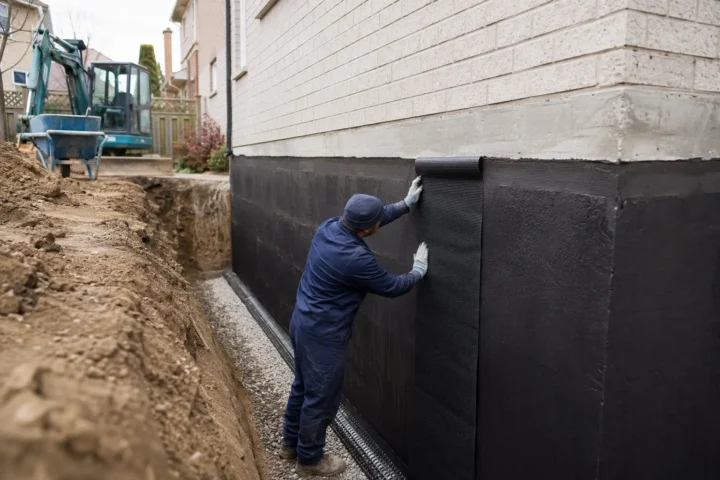
Foundation excavation, wall preparation, membranes and exterior drainage.
Explore service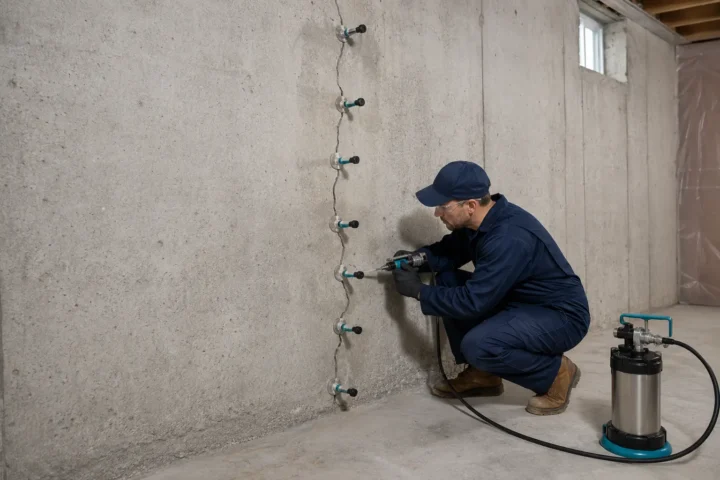
Focused repair for leaking cracks and accessible foundation-wall pathways.
Explore service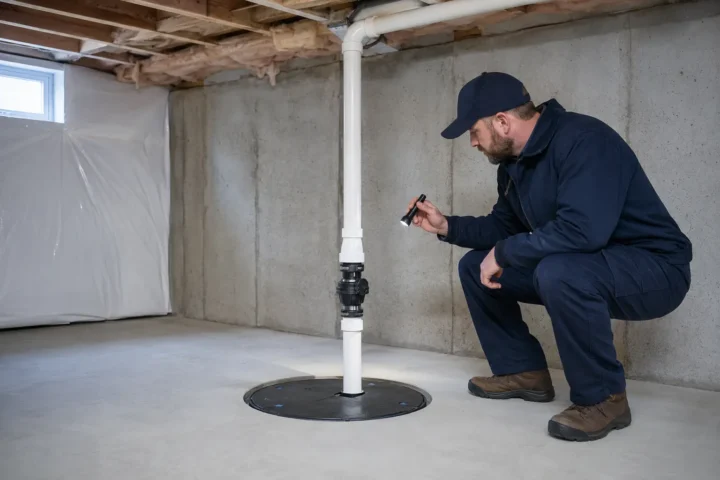
Pump installation and replacement planned around the complete drainage route.
Explore service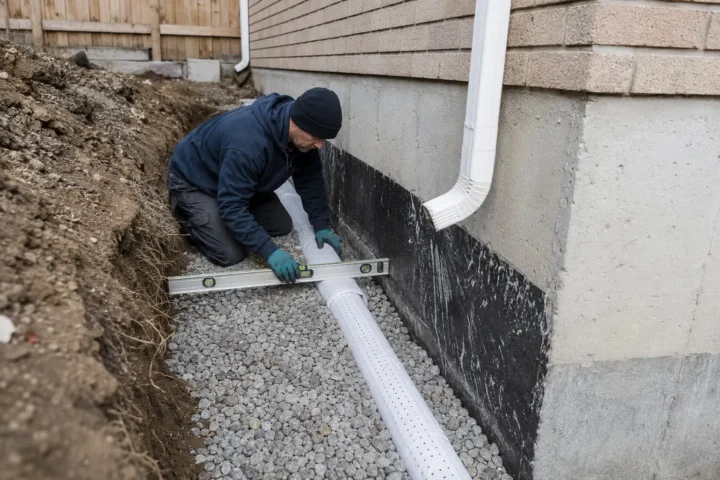
Foundation drainage evaluation, repair and replacement near the footing.
Explore service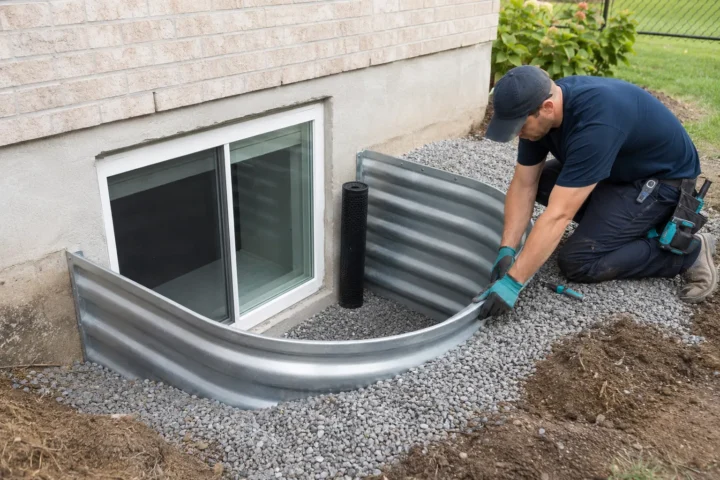
Solutions for wells that fill, drain slowly or allow water against the window.
Explore service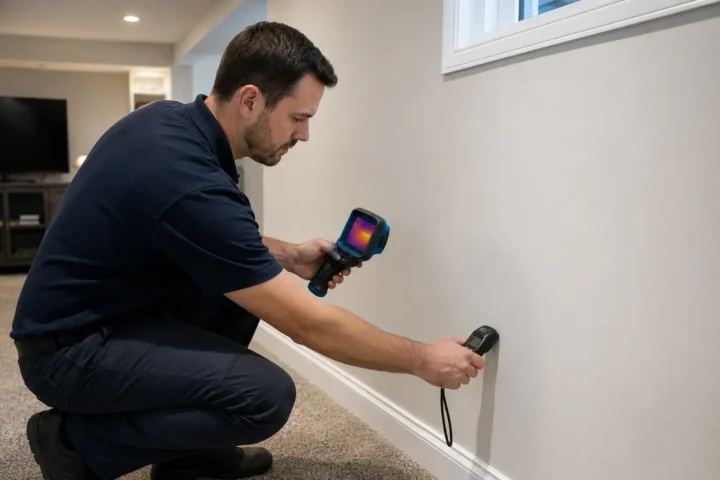
Separate active leakage from humidity, condensation and ground moisture.
Explore serviceThe place where water becomes visible is not always the original entry point. It can move behind drywall, follow framing or spread under finished flooring.
An assessment considers the inside and outside conditions that can be reviewed safely and accessibly before a repair scope is selected.
Review basement water patternsNeither method is automatically right for every property. The water pathway, access, drainage and basement finishes guide the choice.
| Consideration | Interior approach | Exterior approach |
|---|---|---|
| Primary function | Collect and direct incoming water | Protect the outside of the foundation wall |
| Access required | Basement perimeter | Excavation beside the foundation |
| Main disruption | Interior finishes near treated walls | Soil, landscaping and exterior features |
| Common components | Drainage channel, wall drainage and sump connection | Wall repair, membrane, drainage layer and footing drainage |
| Best choice | Depends on the problem and property | Depends on the problem and property |
The exact work changes by service, but the reasoning should remain understandable.
Review where, when and how often water appears.
Check visible cracks, walls, windows, finishes and sump equipment.
Consider accessible grading, drainage, wells and foundation areas.
Separate a focused entry point from broader drainage conditions.
Explain the system, access, components and affected areas.
Finish the approved work and explain maintenance considerations.
Explore exterior membranes, interior drainage, crack repair, sump-pump, weeping-tile and window-well work.
A dry finished basement remains the objective behind waterproofing and drainage work.
View project detailsExterior grading, downspout, window well and foundation conditions reviewed together.
View project detailsInspection of recurring seepage where the foundation wall meets the basement floor.
View project detailsMoisture patterns reviewed to help distinguish leakage from seasonal condensation.
View project detailsGround and wall vapour-control materials installed after the water path is addressed.
View project detailsWindow-well drainage and stone prepared to move water away from a below-grade window.
View project detailsA useful assessment can consider foundation cracks, windows, grading beside the home, roof-water discharge, visible drainage connections and sump equipment as parts of one water-management system.
Explore Flood PreventionHeavy rain can saturate soil and increase water around the foundation. Cracks, windows, wall-floor joints, penetrations or limited drainage may then provide an entry path.
Neither method is automatically best. Exterior work addresses the outside of the foundation, while interior systems collect and direct water from inside. Access, finishes and the water source determine suitability.
Many accessible vertical cracks in poured-concrete walls can be treated from inside when their condition is suitable and no structural concern is evident.
Paint or surface coating does not normally correct an open crack, window-well overflow or water pressure at the wall-floor joint.
Possible signs include recurring base-of-wall seepage, unusual sump activity or poor window-well drainage, but buried conditions should be evaluated before replacement is assumed.
Replacement may be appropriate when the pump does not start reliably, cannot reduce the water level, cycles abnormally, makes mechanical noise or no longer suits the drainage demand.
A blocked drain, low well rim, clogged stone, poor grading or nearby downspout can all contribute. The window itself should also be checked.
Yes, but finishes near the affected wall may need selective removal. Exterior work may reduce interior disruption when outside access is suitable.
Share the location, timing, basement finish and any visible cracks, sump-pump concerns or window-well problems. Clear photographs help us understand the request.